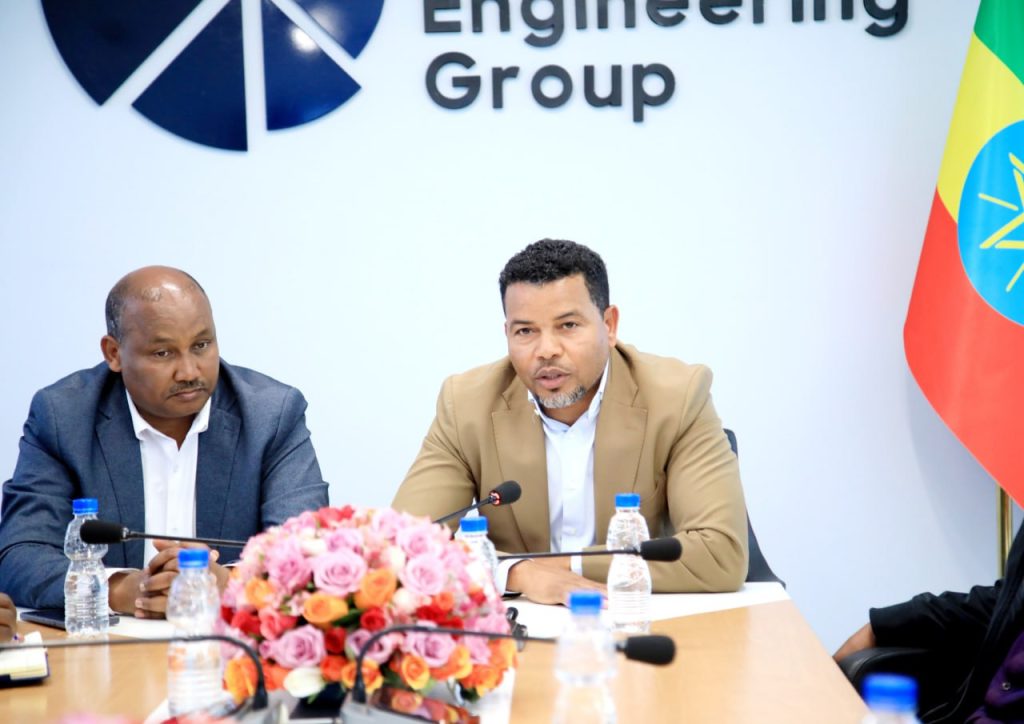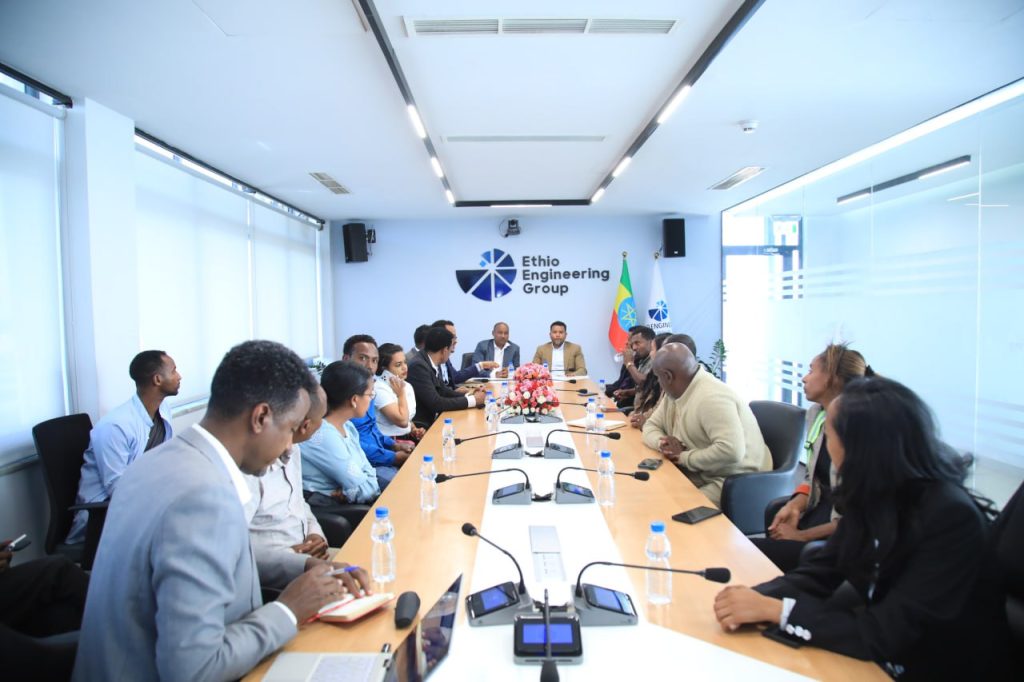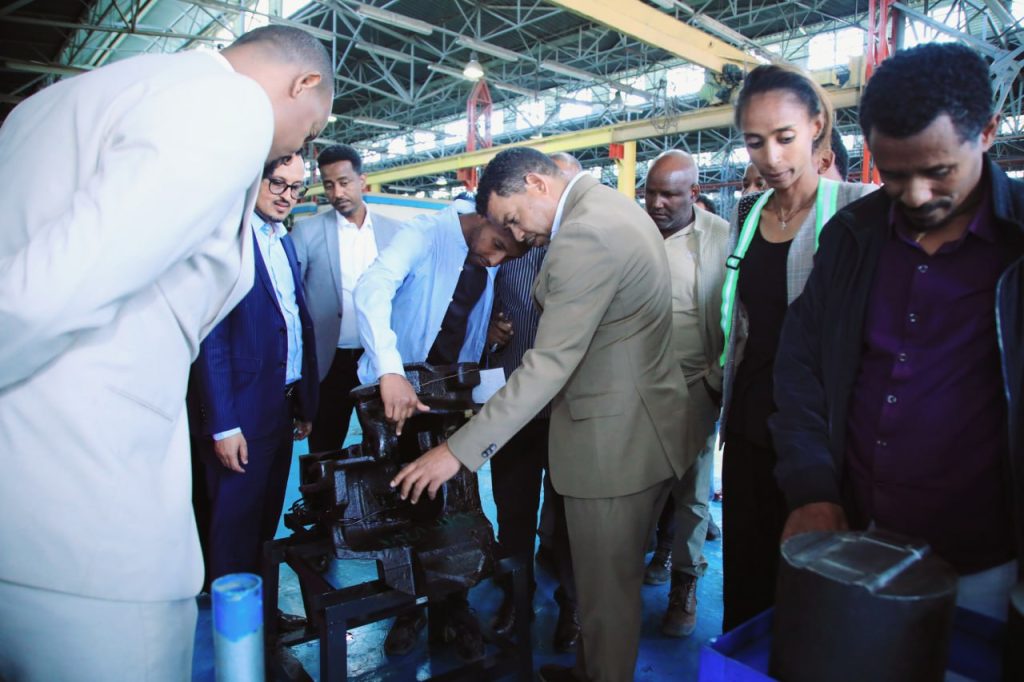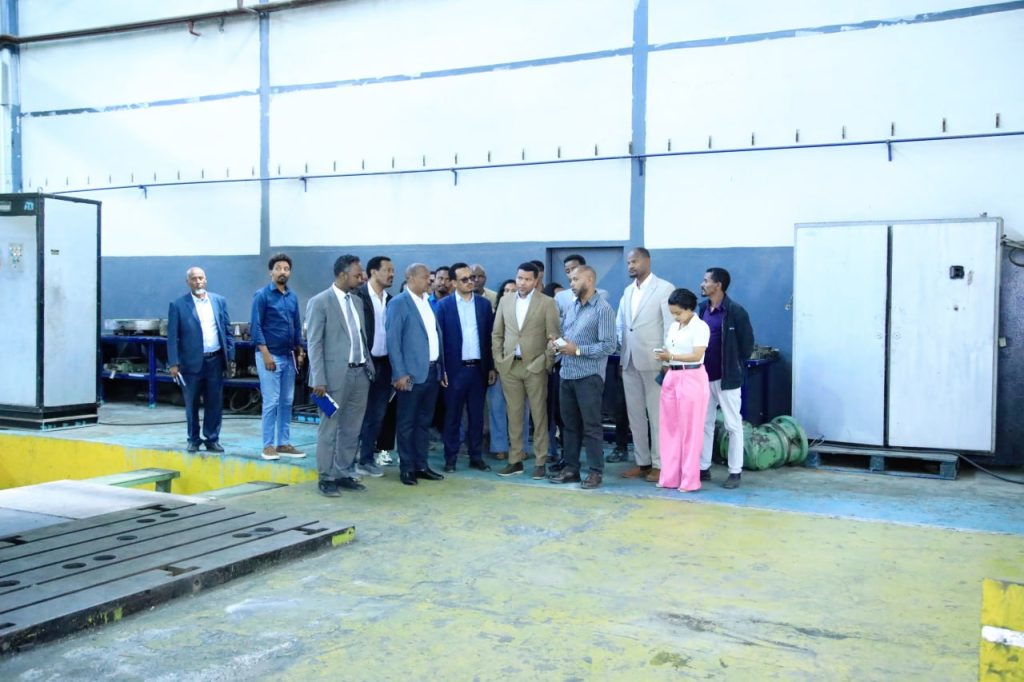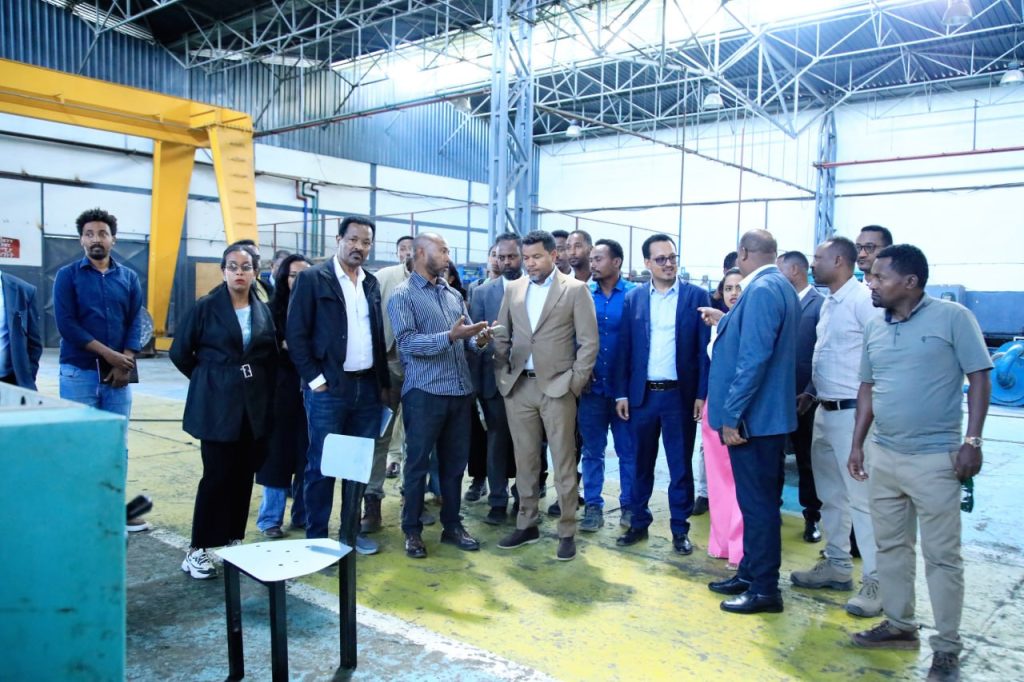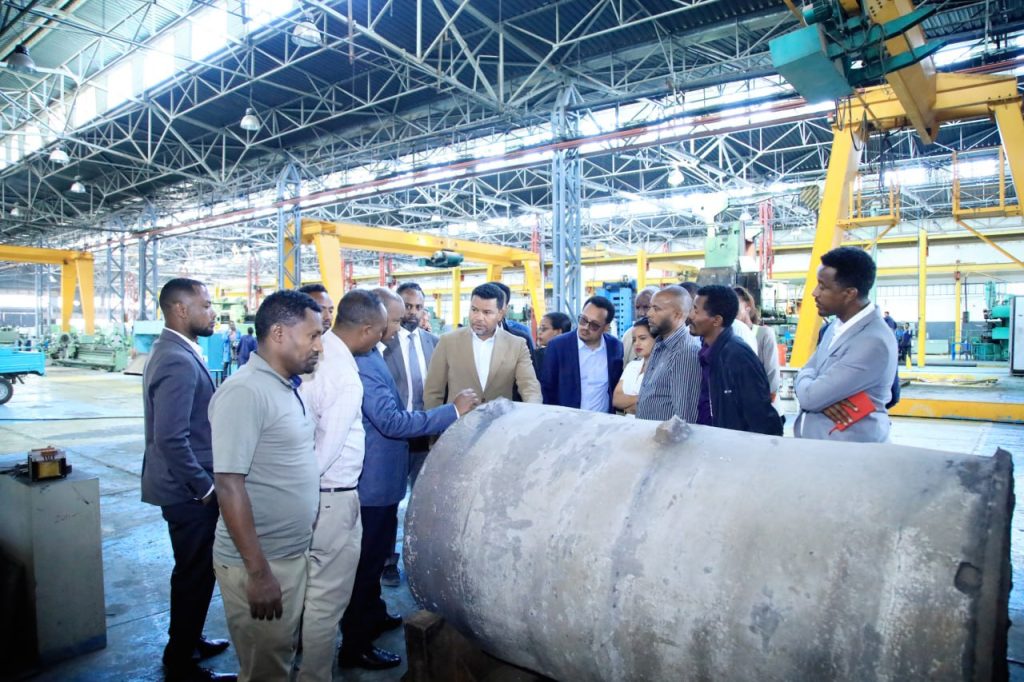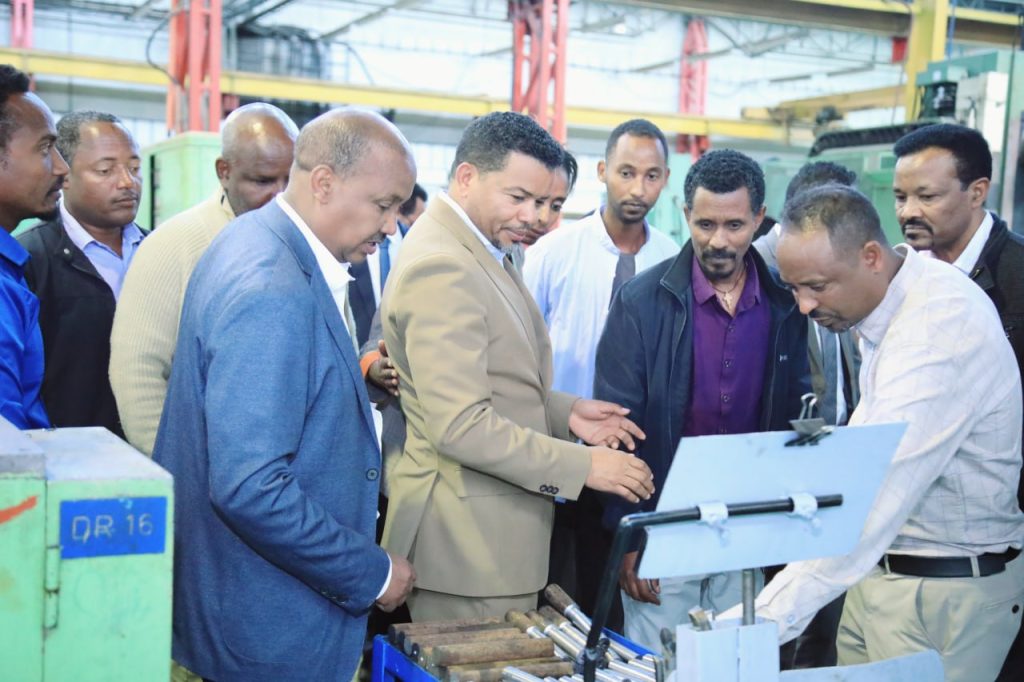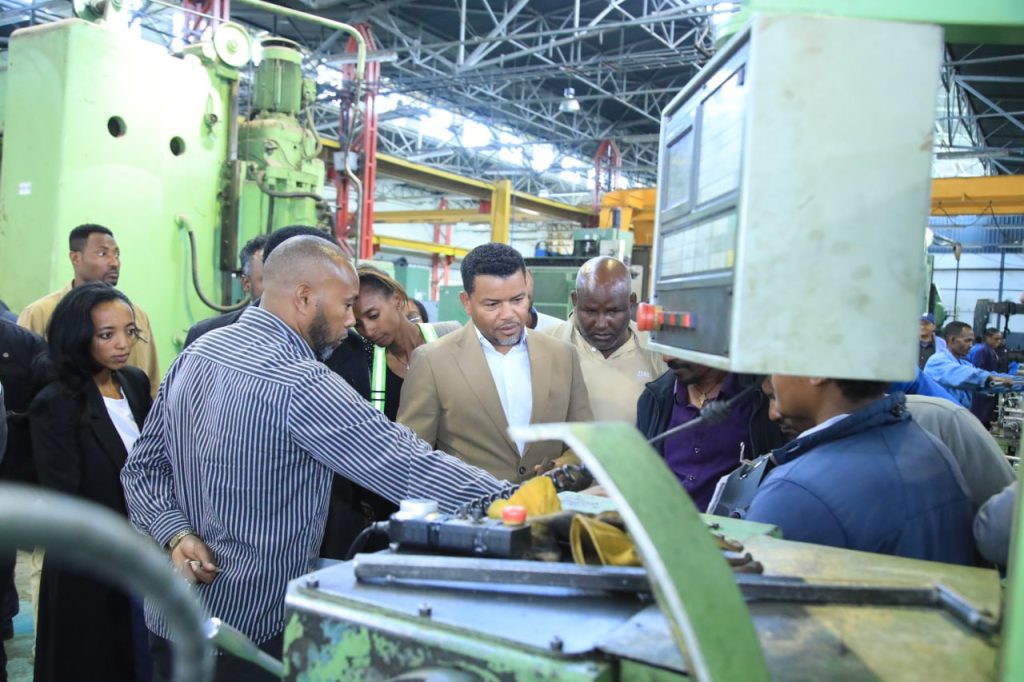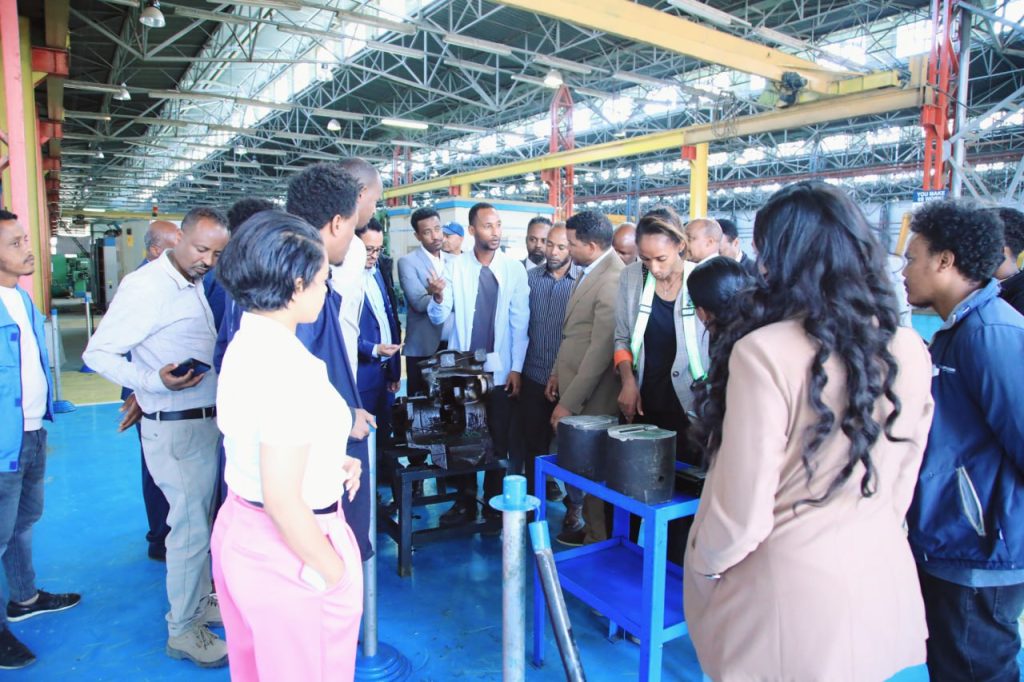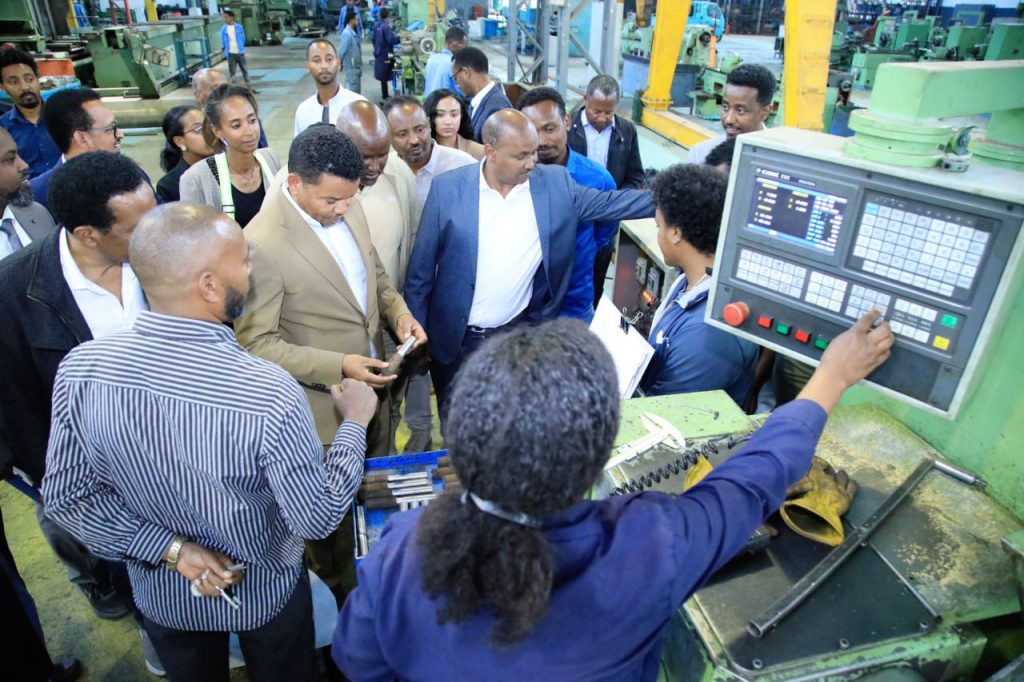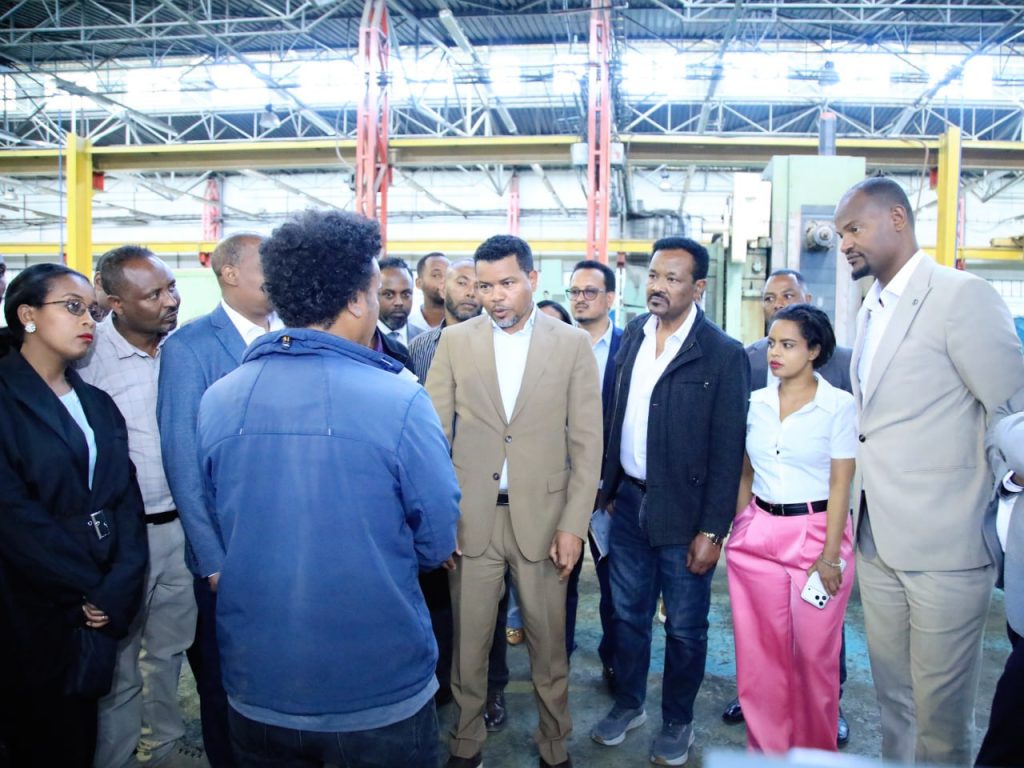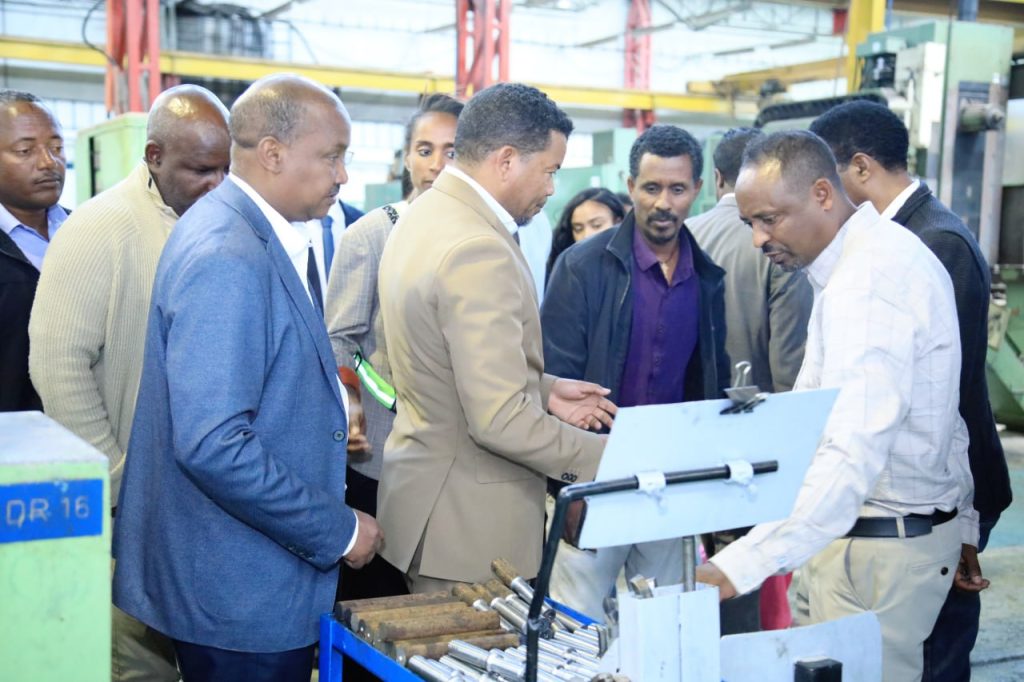
A delegation led by the Chief Executive Officer of the Ethio–Djibouti Railway, Engineer Takele Uma, also visited industries under the Ethio Engineering Group and inspected sample products manufactured for railway infrastructure development.
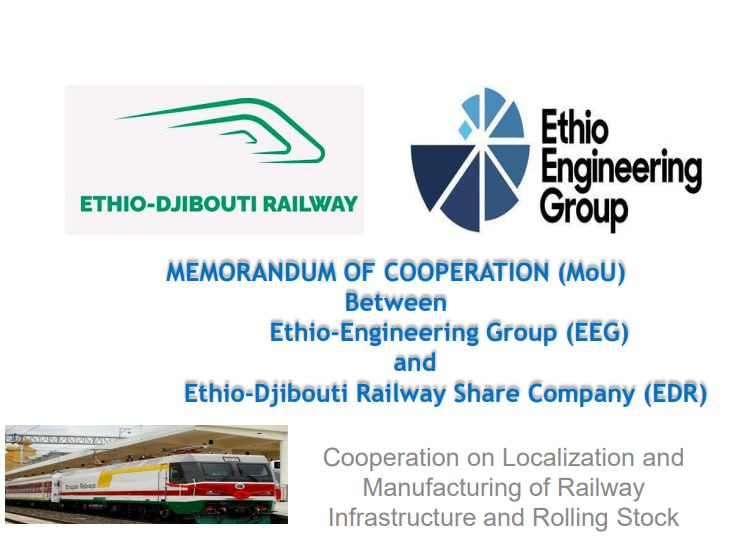
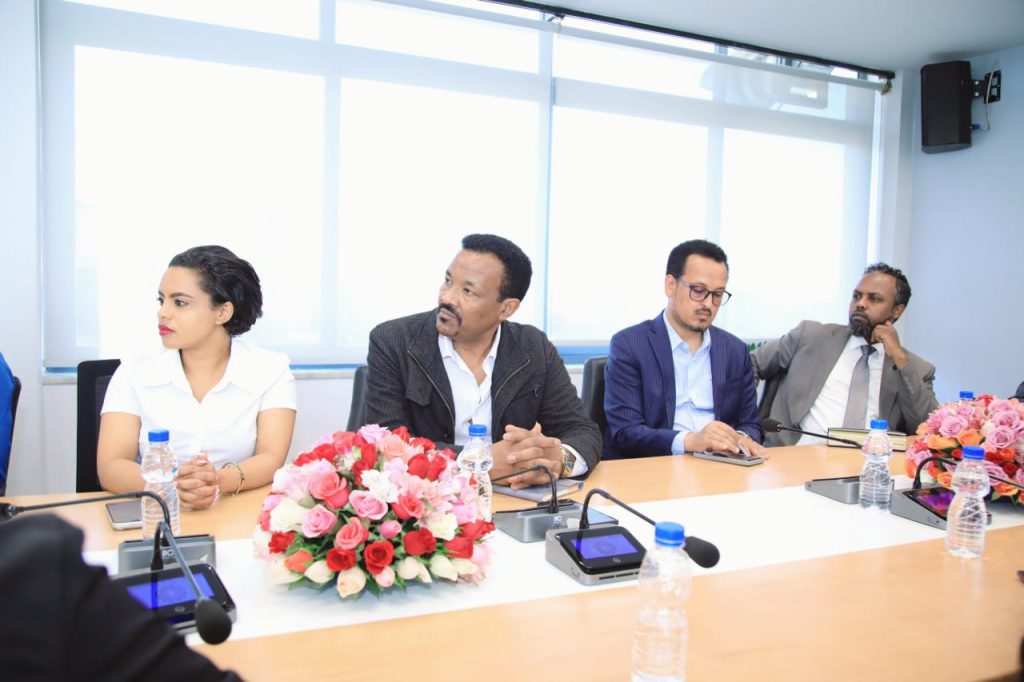
A 10-year cooperation framework, jointly prepared by the two institutions, was presented, and discussions were held on short-, medium-, and long-term joint activities to be implemented. As outlined in the framework, the two institutions will work together on railway infrastructure expansion, railway operations, and research and development (R&D) activities.
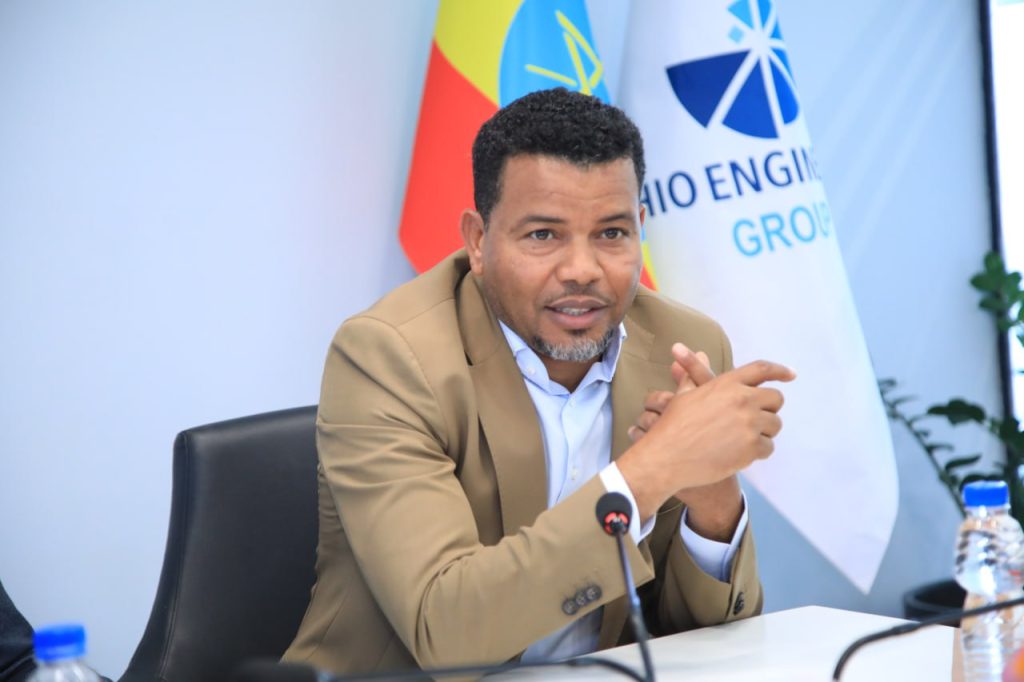
During the program, Engineer Takele Uma stated that the government’s main objective is to ensure that products currently imported with high foreign currency costs are produced domestically. Accordingly, as a policy-implementing institution, it is necessary that spare parts and products required for railway infrastructure development be manufactured locally by the domestic Ethio Engineering Group.
He also explained that a roadmap has been prepared to construct 5,500 kilometers of railway lines over the next 5 to 10 years. In this regard, he emphasized that Ethio Engineering Group has a significant role to play in this endeavor.
Engineer Takele further stated that the Group will also have a role in the ongoing internal railway line expansion project at AMG Holdings.
For his part, the Chief Executive Officer of Ethio Engineering Group, Colonel Shegaw Mulugeta, noted that three industries under the Group are engaged in the steel sector, and affirmed that they possess the capacity required for infrastructure expansion. He also stated that the Group is undergoing a reform process and is working to deliver its products with better quality and faster turnaround.
Both institutions expressed their belief that by working together and supporting one another in technology, it will be possible to reduce dependence on imported products.
In addition to the discussions, sample spare parts produced for the Ethio–Djibouti Railway and the manufacturing facilities of the industries were visited.